Quick Trim Blog

QuickTrim is a weight loss program that;

1. Burns fat
2. Supresses appetite 3. Cleanses the body of accumulated toxins
4. Supplies the body with supplements with antioxidant properties.

QuickTrim Bottle The QuickTrim products for weight loss are 3, some are used individual and some in combination. These 5 Quick Trim weight loss products are;

1. QuickTrim Extreme Burn Weight Loss Formular
2. QuickTrim Burn & Cleanse 14 Day Diet System
3. QuickTrim Fast-Shake (Protein Shake)

QuickTrim also a number of other products that work synergistically to enhance weight loss abilities of some of the main weight loss products above namely;

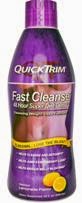
1. QuickTrim Fast Cleanse
2. QuickTrim Celluslim Body Sculpting Gel
3. QuickTrim Protein Shake
4. QuickTrim Sugar & Carb Cheater and
5. QuickTrim HotStix

Click here or click on the button below to get a QuickTrim product at a discount.

QuickTrim products are produced by a reputable company called GNC. GNC has been in the health and nutrition industry for years and they produce various other natural ingredient products. GNC is a trusted and professional company.

Showing posts with label Quick Trim Gold. Show all posts

Sunday, 30 June 2013

New Tool To Measure Sugar Consumption

Scientists at the University of Alaska Fairbanks identified a new tool that can dramatically improve the notoriously inaccurate surveys of what and how much an individual eats and drinks. Their research is published in the June 2013 issue of the Journal of Nutrition.

Conventional wisdom says that consumption of sugar-sweetened beverages such as soda and fruit juice is a significant contributor to obesity and chronic disease risk, but the science surrounding this issue is inconclusive. Part of the problem is that in a typical diet survey few people accurately and consistently recall what they consumed. The problem becomes exaggerated when people underreport foods they know are less healthy for them, like sugars.

"We were looking for an objective biomarker that could accurately measure long-term sugar intake from a single blood or hair sample" said Diane O'Brien, project leader and biologist with the UAF Center for Alaska Native Health Research at the Institute of Arctic Biology.

The biomarker O'Brien and her CANHR research group pilot-tested was the ratio of two different carbon atoms (heavy carbon 13 and light carbon 12) which are incorporated into plants during photosynthesis. The ratio, called an isotopic signature, is distinct in corn and sugar cane, which are the sources of nearly all of the sugars found in sugar-sweetened beverages.

"We used the isotopic signature of alanine an amino acid and building block of protein that essentially traps the carbon from dietary sugar so that it can be measured in the protein component of hair or blood," O'Brien said.

Even after foods and beverages are consumed, metabolized, transported in blood and stored in body tissues, these isotopic signatures remain largely intact. The more sugar-sweetened beverages an individual consumes, the greater alanine's carbon isotope ratio will be. Importantly, O'Brien's group found that alanine was uncorrelated with other foods that can contribute to elevated carbon ratios.

Although the use of isotope signatures to study food webs and diet is not new, previous efforts to accurately measure sweetener intake have not been particularly successful. The use of alanine and the technique employed by O'Brien's group makes their findings particularly exciting.

"Even for validated and well-accepted biomarkers of diet, associations with self-reported intake are generally very weak. Our biomarker was able to explain almost half of the variation in self-reported sugar-sweetened beverage intake, which in this field is a very high level of explanatory power," said O'Brien.

The scientists' findings are also being used in other health and diet-related research.

"Diane's research program has provided CANHR with incredibly valuable objectively measured biomarkers of food intake," said CANHR Director Bert Boyer. "These biomarkers are currently being used to help us understand the role polyunsaturated fatty acids play in disease prevention, including the modification of genetic risk."

The tool is not without its drawbacks, caution the authors.

"The gas chromatography-combustion-isotope ratio mass spectrometry process we used isn't inexpensive and or widely available," O'Brien said. "We expect that our findings will be most useful as a calibration tool, either for self-reported dietary data or more high-throughput biomarkers of sweetener intake."

Providing reviews on QuickTrim products and weight loss writings & articles online.

Thursday, 27 June 2013

In Animal Model, Dietary Fructose Found To Cause Liver Damage

The role of dietary fructose in the development of obesity and fatty liver diseases remains controversial, with previous studies indicating that the problems resulted from fructose and a diet too high in calories.

However, a new study conducted in an animal model at Wake Forest Baptist Medical Center showed that fructose rapidly caused liver damage even without weight gain. The researchers found that over the six-week study period liver damage more than doubled in the animals fed a high-fructose diet as compared to those in the control group.

The study is published in the American Journal of Clinical Nutrition.

"Is a calorie a calorie? Are they all created equal? Based on this study, we would say not," said Kylie Kavanagh, D.V.M., assistant professor of pathology-comparative medicine at Wake Forest Baptist and lead author of the study.

In a previous trial which is referenced in the current journal article, Kavanagh's team studied monkeys who were allowed to eat as much as they wanted of low-fat food with added fructose for seven years, as compared to a control group fed a low-fructose, low-fat diet for the same time period. Not surprisingly, the animals allowed to eat as much as they wanted of the high-fructose diet gained 50 percent more weight than the control group. They developed diabetes at three times the rate of the control group and also developed hepatic steatosis, or non-alcoholic fatty liver disease.

The big question for the researchers was what caused the liver damage. Was it because the animals got fat from eating too much, or was it something else?

To answer that question, this study was designed to prevent weight gain. Ten middle-aged, normal weight monkeys who had never eaten fructose were divided into two groups based on comparable body shapes and waist circumference. Over six weeks, one group was fed a calorie-controlled diet consisting of 24 percent fructose, while the control group was fed a calorie-controlled diet with only a negligible amount of fructose, approximately 0.5 percent.

Both diets had the same amount of fat, carbohydrate and protein, but the sources were different, Kavanagh said. The high-fructose group's diet was made from flour, butter, pork fat, eggs and fructose (the main ingredient in corn syrup), similar to what many people eat, while the control group's diet was made from healthy complex carbohydrates and soy protein.

Every week the research team weighed both groups and measured their waist circumference, then adjusted the amount of food provided to prevent weight gain. At the end of the study, the researchers measured biomarkers of liver damage through blood samples and examined what type of bacteria was in the intestine through fecal samples and intestinal biopsies.

"What surprised us the most was how quickly the liver was affected and how extensive the damage was, especially without weight gain as a factor," Kavanagh said. "Six weeks in monkeys is roughly equivalent to three months in humans."

In the high-fructose group, the researchers found that the type of intestinal bacteria hadn't changed, but that they were migrating to the liver more rapidly and causing damage there. It appears that something about the high fructose levels was causing the intestines to be less protective than normal, and consequently allowing the bacteria to leak out at a 30 percent higher rate, Kavanagh said.

One of the limitations of the study was that it only tested for fructose and not dextrose. Fructose and dextrose are simple sugars found naturally in plants.

"We studied fructose because it is the most commonly added sugar in the American diet, but based on our study findings, we can't say conclusively that fructose caused the liver damage," Kavanagh said. "What we can say is that high added sugars caused bacteria to exit the intestines, go into the blood stream and damage the liver.

"The liver damage began even in the absence of weight gain. This could have clinical implications because most doctors and scientists have thought that it was the fat in and around tissues in the body that caused the health problems."

The Wake Forest Baptist team plans to begin a new study using the same controls but testing for both fructose and dextrose over a longer time frame.

Providing reviews on QuickTrim products and weight loss writings & articles online.

QuickTrim Burn & Cleanse

Quick Trim Burn And Cleanse